A complete autonomous systems career pathway for CTE programs, workforce development centers, defense readiness, and higher education. From first flight to FAA Part 107 certification, powered by Hopper.
Build Fly Code® is FTW Robotics' flagship curriculum, a capability-based training program where learners don't just study drones, they operate them. Built around the Hopper® drone, BFC delivers real-system, mission-driven instruction across five industry verticals: emergency response, precision agriculture, package delivery, search & rescue, and site inspection. Every lesson is grounded in authentic scenarios, simulated field operations, and formative assessments that build toward FAA Part 107 certification and workforce readiness. BFC is designed to scale from individual classrooms to district-wide deployment, connecting education, career training, and national competition through a single sovereign platform and serves as a dual-sided marketplace connecting industry directly with learners.
The BFC 2026 season runs five industry verticals, each paired with integrated FTW Part 107 lessons. Learners work through real-world mission scenarios while simultaneously building the regulatory knowledge and technical fluency required for FAA drone pilot certification.
This vertical offers drone-assisted FIREFIGHTING learning experiences, simulating real-world emergency response while building future-ready career skills.
Hands-on activities build readiness topics like airspace, airport operations, flight timing, and communication.
Apply real-world AGRICULTURE practices using drones to monitor and treat crops. Teams focus on precision flight and effective field management.
Build on crop monitoring practices, focusing on weather and clouds, payload effects on flight, and drone maintenance integrated with assessment prep.
This LOGISTICS vertical simulates real-world drone deliveries. Teams use custom code to complete package drops and optimize delivery routes.
Learners apply their experiences to reinforce line of sight rules, pilot mindset, and NTSB reporting, using crash scenarios to practice real-world incident documentation.
This PUBLIC SAFETY vertical simulates real-world rescues. Teams fly and code drones to find hidden objects and complete autonomous missions.
Reinforce learnings with lessons on drone sensors, safety checks, and Remote PIC duties, using current & past mission results to highlight key takeaways.
This vertical simulates drone use in INFRASTRUCTURE inspections, like monitoring bridges, buildings, and power lines.
Enhance readiness through hands-on rescue scenarios that apply sectional maps, anti-collision lighting, cloud-coverage limits, and MLS/ALS procedures.
The BFC curriculum features detailed, real-world case study-based lessons that showcase how drones are used across diverse industries. Each lesson includes setup schematics, extension activities, embedded formative assessments, and sample responses, providing educators with everything they need to deliver engaging, standards-aligned instruction.
Topics are introduced with embedded test-prep questions to reinforce understanding. Each case study simulation is paired with a thoughtfully designed slide deck that helps teachers guide learners. Each deck provides real-world context, outlines key details, and sets clear expectations for each phase of execution, ensuring a cohesive and engaging learning experience.
The BFCC curriculum includes a versatile student workbook, available in both digital and printable formats. Learners use their workbook to log data, respond to scenario-based questions, and reflect on their findings during each simulation, deepening understanding of key concepts.
With Build Fly Code Compete, learners design, program, and fly Hopper drones while solving real-world challenges that spark curiosity and build career-ready skills.
This flying challenge simulates real-life drone-assisted FIREFIGHTING missions, where drones are deployed to hazardous areas to help extinguish fires. This scenario mirrors how emergency services use drones to access otherwise unreachable areas and provide critical support during firefighting efforts.
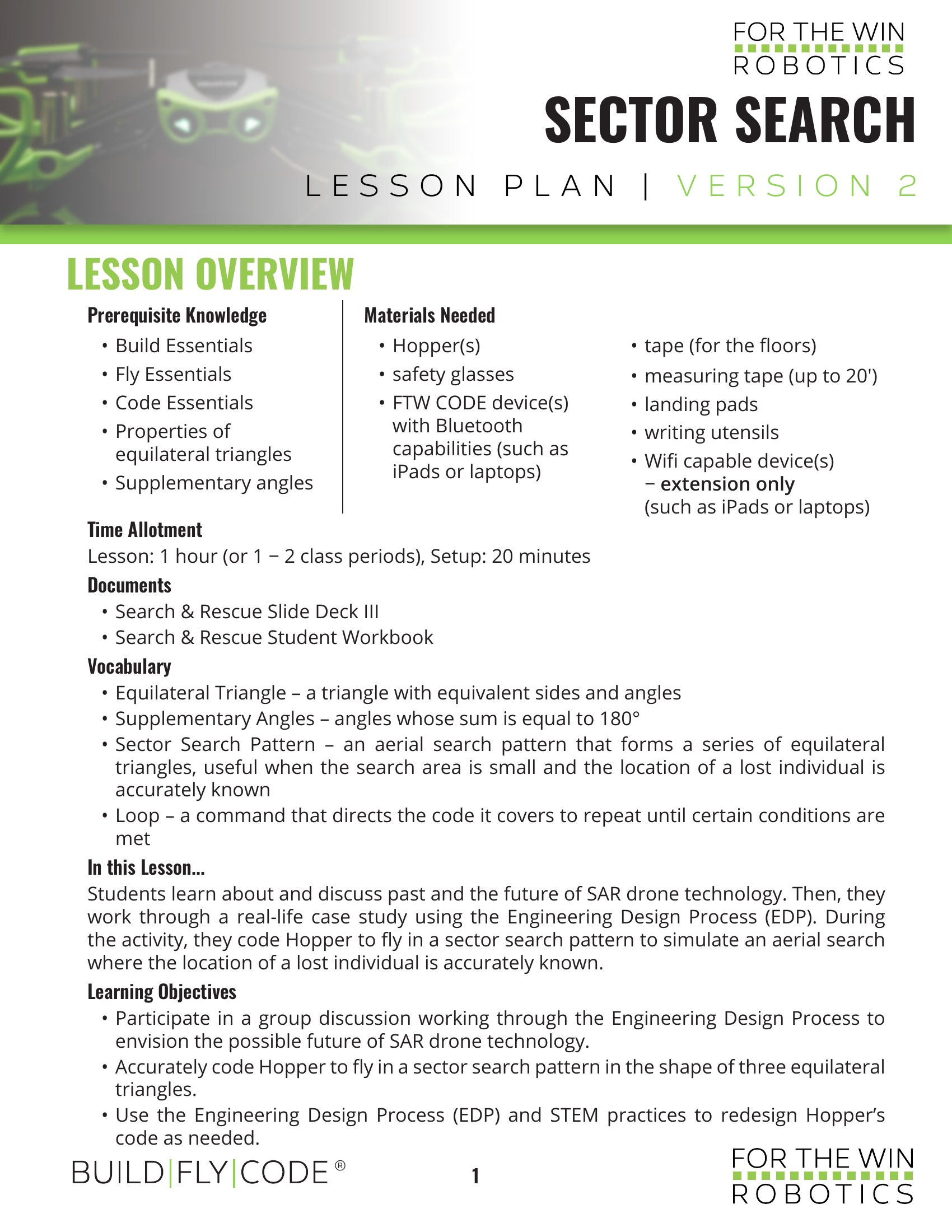
This challenge combines flying and coding to simulate real-world scenarios where drones SEARCH AND RESCUE objects in hazardous environments, such as after natural disasters.
As drones become increasingly relevant in LOGISTICS, this challenge reflects real world drone delivery applications. Teams will demonstrate how Hopper® drones can address delivery challenges using custom code. The goal is to simulate small package deliveries, showcasing how drones can optimize delivery.
Join the 2026 Build Fly Code Compete season.
View National Leaderboard Learn More About Compete
FTW's FAA Part 107 programming is built on the foundation of Build Fly Code and blends Part 107 knowledge areas like airspace classifications, weather interpretation, emergency procedures, drone maintenance, and regulatory compliance into each lesson. Like BFC, lessons incorporate simulated, scenario-based problem solving, and formative assessments, to support key Part 107 topics. The result is a deeply experiential approach that keeps learners actively engaged while developing the technical knowledge and confidence needed for drone pilot certification and workforce readiness.
FTW's platform blends key Part 107 topics with hands-on, real-world drone missions, and a premier test-prep course built for the modern learner.
Hopper Quest is a twelve-mission STEM curriculum designed by FTW Robotics to blend drone piloting, coding, and real-world problem-solving for after-school programs.
Hopper Quest immerses learners in hands-on drone missions where they build skills, solve problems, and grow into confident operators ready for tomorrow's challenges.
Build Fly Code® is built for institutional adoption. Every component of the program is designed to meet the compliance, documentation, and funding requirements that program directors and district procurement offices need.
Hopper hardware and BFC curriculum qualify as CTE equipment and instructional materials under the Strengthening Career and Technical Education for the 21st Century Act. FTW provides grant documentation support for district procurement offices.
Hopper is not exposed to components from prohibited foreign manufacturers, making it fully compliant with NDAA Section 889. Eligible for use in Title I schools, JROTC programs, federally funded workforce contracts, and defense-adjacent curricula.
FTW Robotics accepts purchase orders and works directly with district procurement teams. Quote requests, sole-source justification letters, and compliance documentation are available upon request.
Received. Thanks for helping us improve.
Help us improve ftw-robotics.ai
Tell us about your program. We will research local and national grant opportunities specific to your situation and share our findings with you directly.